
Building the Foundation for the Autonomous Digital Economy
Talus is the infrastructure that turns AI from a passive observer into an active participant, building the necessary infrastructure in this new sector of the global autonomous economy.
We have been laying out a comprehensive argument for why the next decade of technology belongs to Agentic AI. It’s time we bring the vision into focus: Talus is the infrastructure that turns AI from a passive observer into an active participant, building the necessary infrastructure in this new sector of the global autonomous economy.
The Evolution: From Chatbots to Digital Workers
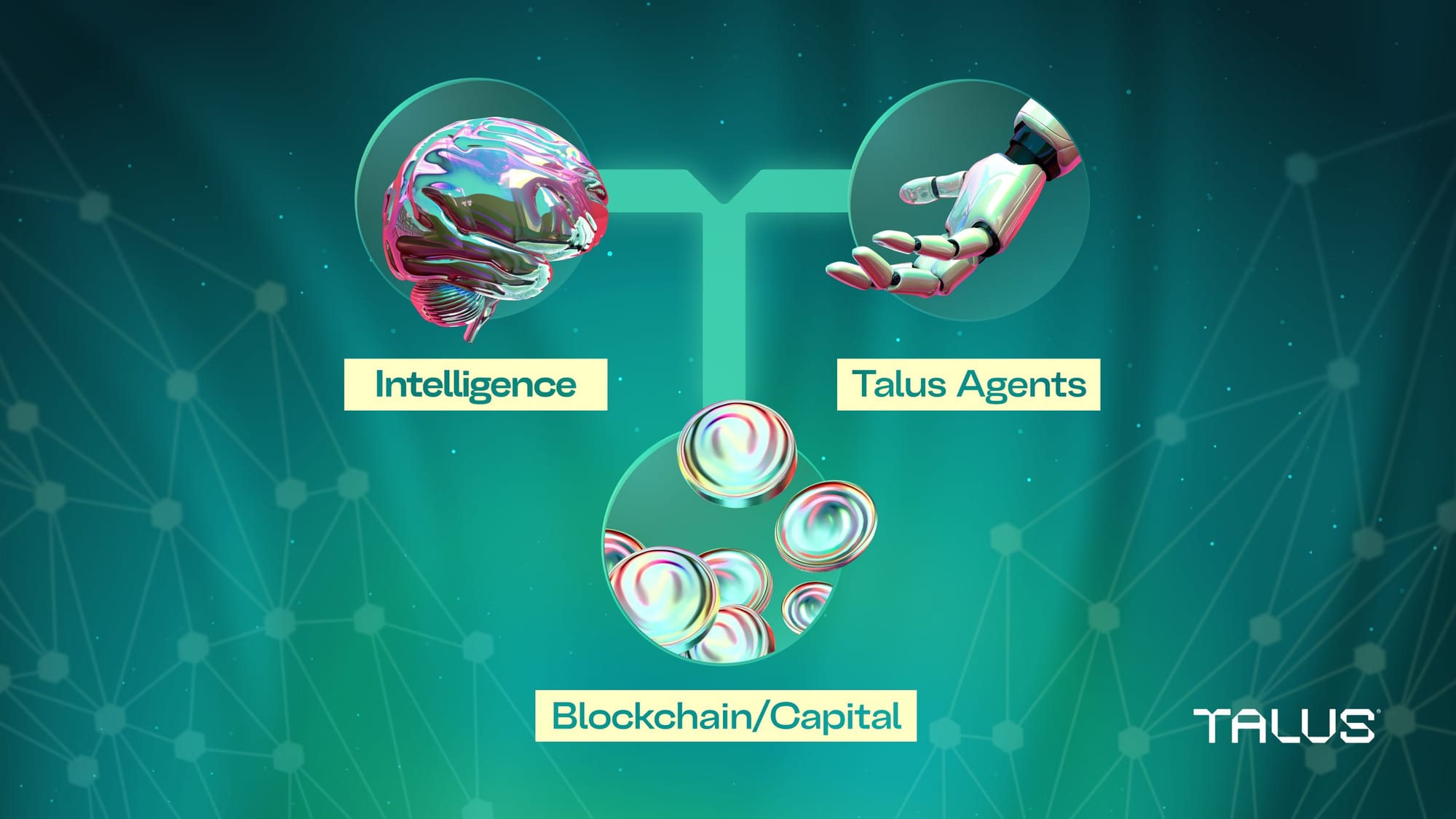
The first great hurdle for AI adoption was the aspect of intelligence, which apps like ChatGPT, Gemini, etc., have made widely accessible. But they leave out the next hurdle: action. Most Generative AI tools are brains trapped in chat boxes, capable of comprehensive planning but incapable of doing anything outside the chat walls. They still require a human to copy-paste or execute their plans.
Talus is bridging this gap by providing AI with "hands". By matching AI reasoning with an agentic body and building it on top of decentralized infrastructure, Talus Agents can:
- Negotiate and Transact: Enabling agents to independently manage assets, negotiate service costs, and settle micro-fees with other agents to fulfill workloads.
- Execute Workflows: Following step-by-step instructions to interact with real-world tools, both on and offchain, autonomously.
- Operate 24/7: Serving as the nervous system for a global economy that never sleeps.
The Infrastructure Mandate: Why Decentralization?
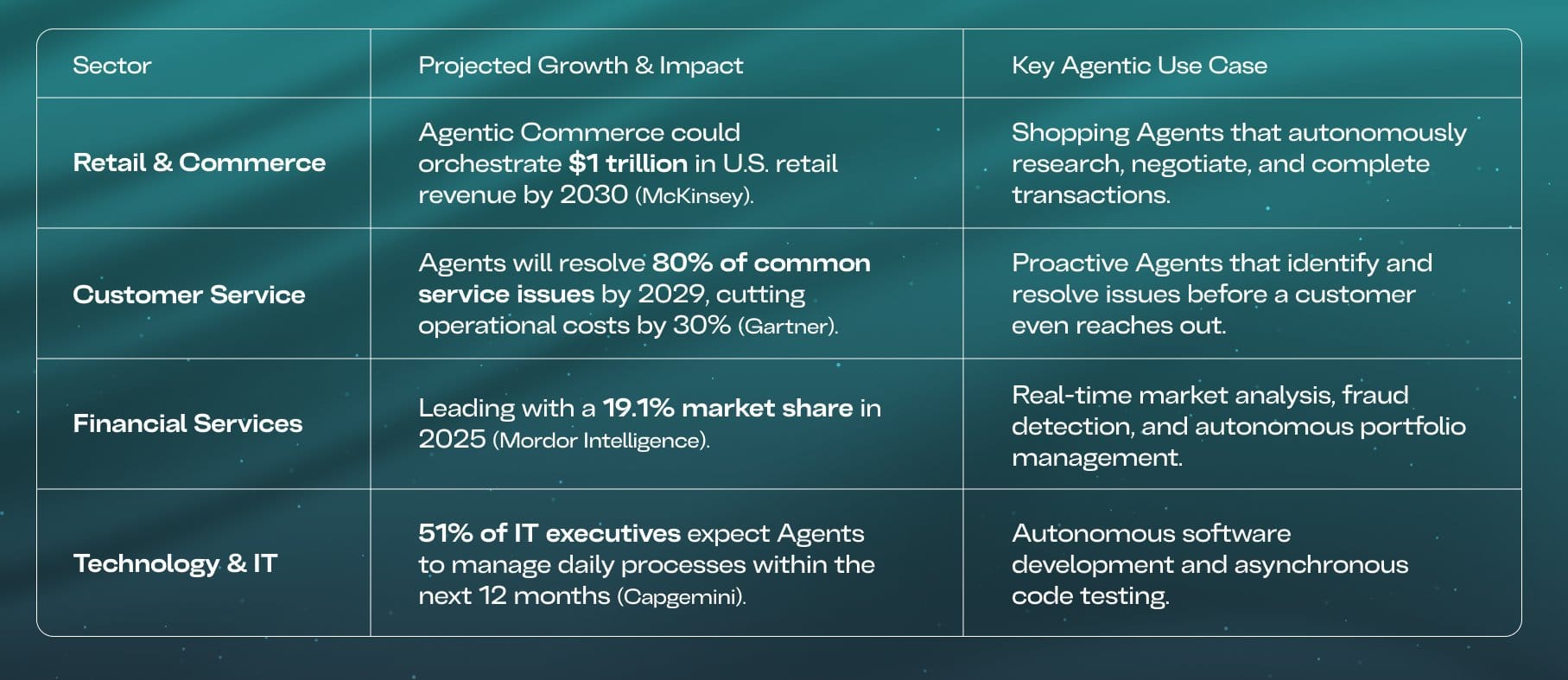
The underlying momentum of Agentic AI is undeniable. Research from The Capgemini Research Institute suggests AI Agents are projected to generate $450 billion in economic value by 2028 (up from $19 Billion in 2025), yet over 80% of organizations (Capgemini) lack the infrastructure to scale these systems. Centralized “black box” systems, which act without the ability to know why, how, or if they did the job properly, have created a massive trust gap that has become a barrier to adoption. Only 27% of polled organizations currently trust fully autonomous agents, down from 43% in 2024 (Capgemini).
Centralized agents represent a systemic risk. If a single provider suffers an outage or a server breach, your entire digital workforce is paralyzed, or your financial assets are drained in a system you can’t see the other side of. Talus replaces the "trust me bro" model of centralized AI with cryptographic certainty:
- Auditability: Finding the best Talus Agent to execute the job you have in mind, and verifying the process through provable onchain receipts.
- Security: Decentralized coordination ensures there is no single point of failure and no hidden scripts managing your assets.
- Ownership: You define the rules and guardrails, not an opaque third-party vendor. Meaning you don’t have hope for the best and trust the system, you control your system.
API Economy 2.0: The Monetization of Code Itself
The current software landscape often fails to reward the architects of utility. If you build a great open-source tool that everyone uses today, you get stars on GitHub; with Talus, you get paid.
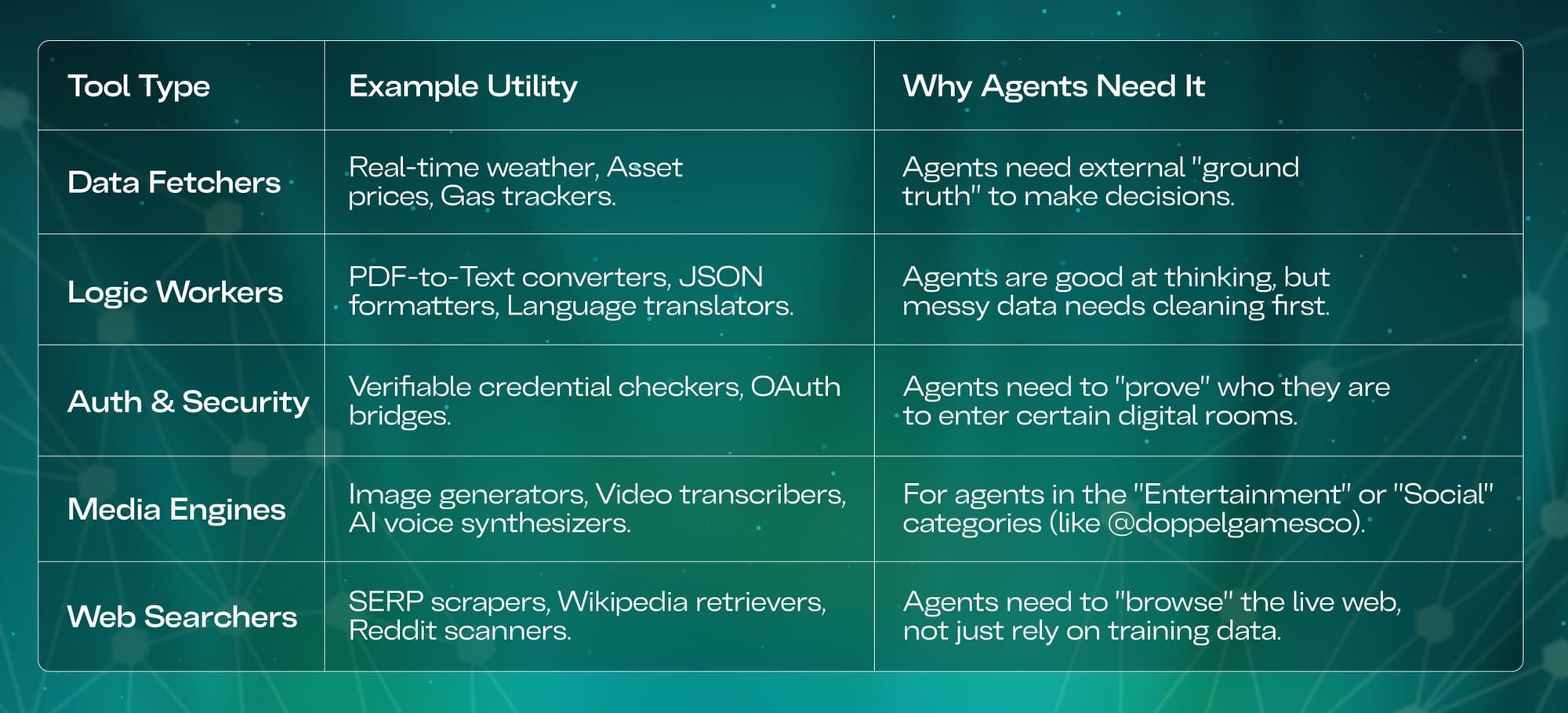
We are entering the API Economy 2.0, where nearly every digital utility, from a PDF parser to a cross-chain liquidity aggregator, can be offered as a live service. That means:
- Build Once, Earn Forever: Connect your tool to the Talus Protocol, and every time an agent incorporates your tooling into its workflow, a micro-fee is routed to you.
- Efficiency Wins: A "free market for code" incentivizes developers to optimize tools to be as lean and cost-effective as possible, rewarding the best engineers in the network.
The Technical Utility of $US
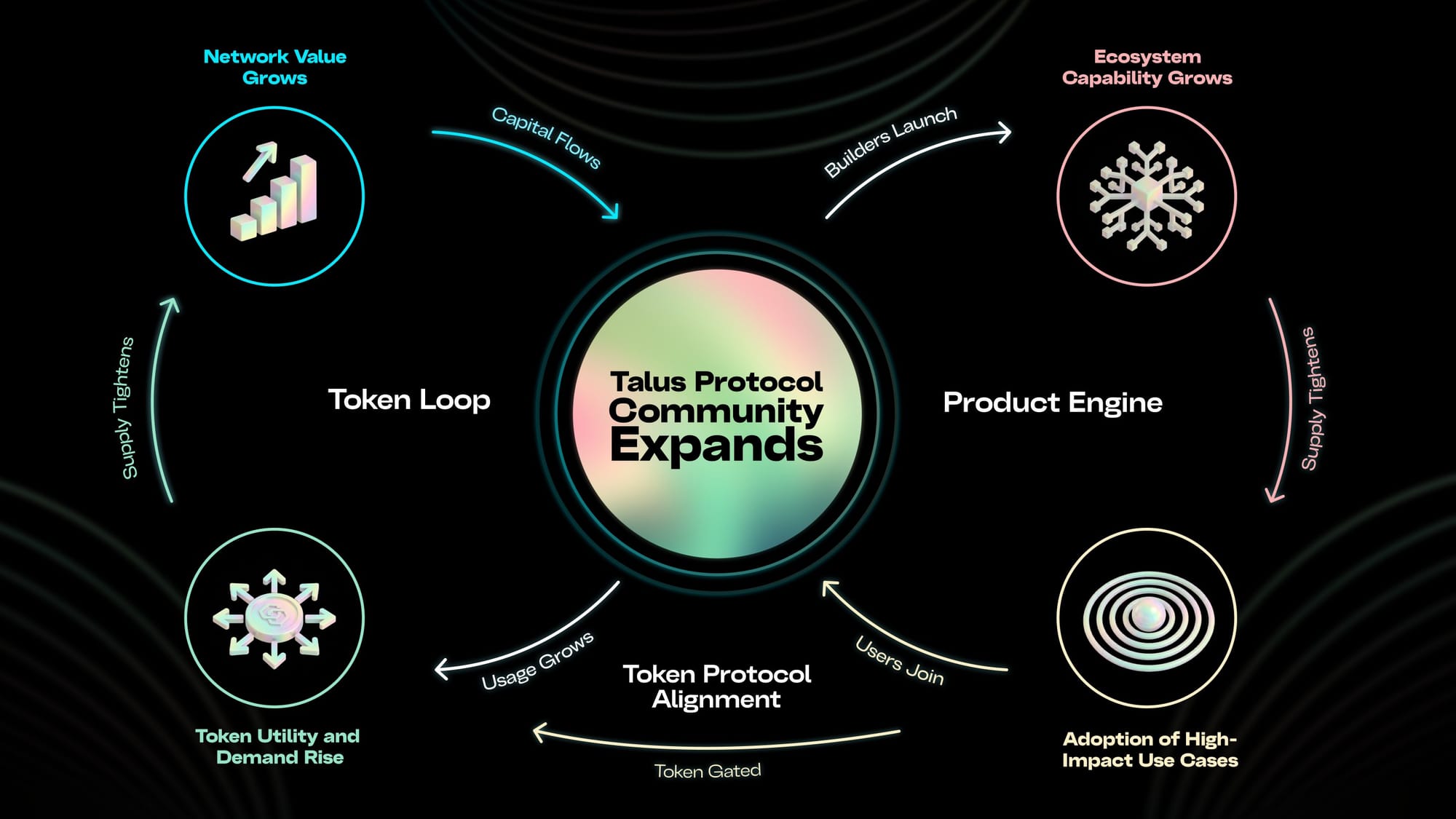
As laid out by the Talus Foundation, binding this entire economy together is the $US token, the coordination asset for the Talus ecosystem. Acting both as the fuel and security for the network, the $US token is used for:
- Resource Allocation: $US is used for workflow settlement and execution priority.
- Network Integrity: Operators stake $US to join the Leader Network and enforce delivery-versus-payment guarantees, while developers stake it to register tools in the marketplace.
- Self-Sustainability: $US aligns developer incentives with network security, creating a self-reinforcing digital labor economy.
The Next Step: Join the Revolution
The shift toward agentic ecosystems is inevitable. We are moving toward a world where AI labor acts as a force multiplier for human ingenuity and efficiency.
The architects of the next decade are building today. Whether you are a developer looking to monetize your tools, an enterprise seeking verifiable automation, or a user ready to deploy your first agent, the infrastructure is ready.
It’s time to join the agentic revolution. It’s time to join Talus.
Apply for access to the Talus Protocol here: https://5hdt04l3q1s.typeform.com/to/IbU6YnmF
To learn more about Talus, follow us on Twitter, check out our GitHub, visit our Discord, and read our blog.